Basal Metabolic Rate: How to Calculate and Improve It
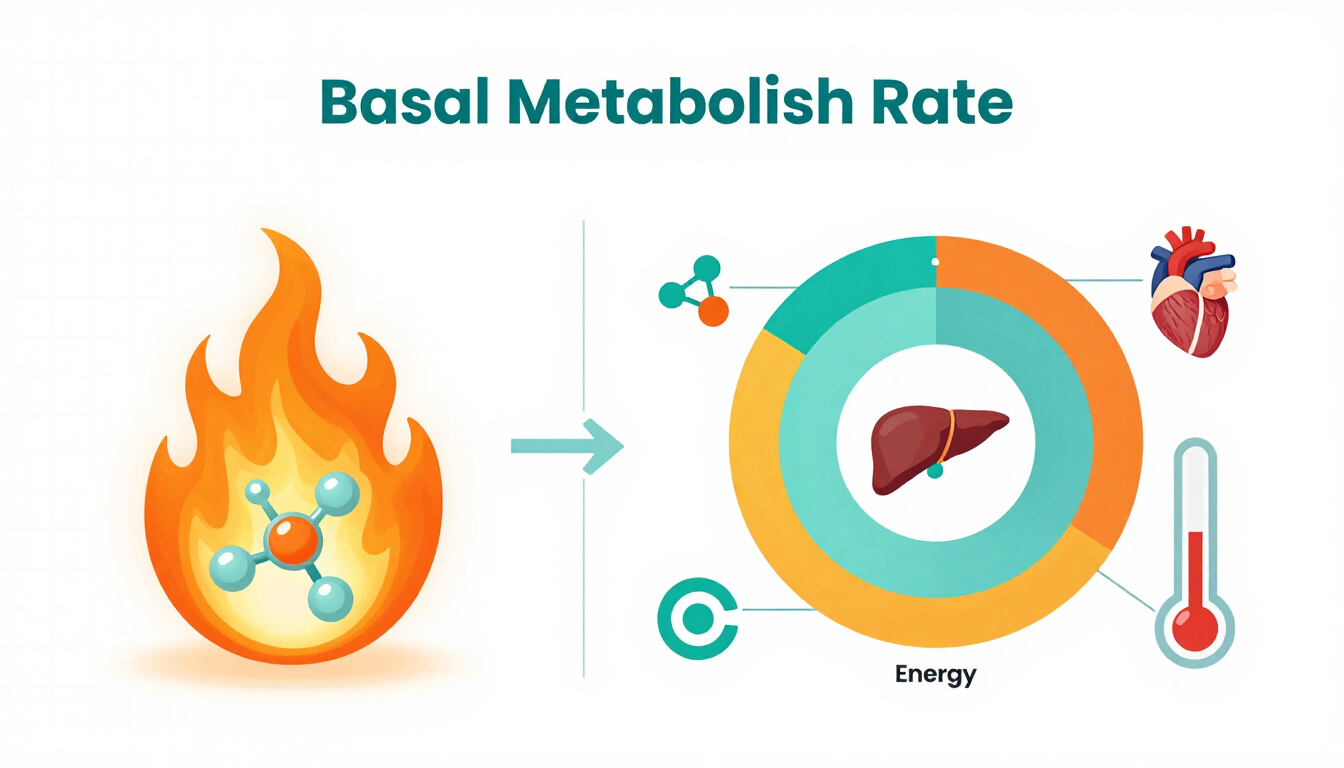
Basal metabolic rate (BMR) is the estimated energy your body consumes at complete rest to stay alive. It is the largest component of daily energy expenditure and the basis for calorie planning. This guide explains how to calculate and influence it. Try the BMR calculator.
BMR vs TDEE
BMR is rest energy; TDEE = BMR × activity factor. Use TDEE for daily calorie planning.
Calculation
Mifflin-St Jeor: males 10×weight(kg) + 6.25×height(cm) − 5×age + 5; females −161. Example: a 30-year-old male, 70 kg, 170 cm ≈ 1617 kcal.
Factors affecting BMR
- Muscle mass: more muscle = higher BMR.
- Age: BMR tends to decline with age.
- Sex: men usually have higher BMR.
- Genetics and health: vary between individuals.
Tips to improve BMR
- Strength training to build muscle.
- Avoid very low calorie diets that slow metabolism.
- Eat enough protein.
- Stay active throughout the day.
Frequently Asked Questions
What is BMR?
Basal metabolic rate is the estimated energy your body uses at complete rest to maintain vital functions like breathing and circulation.
What is the difference between BMR and TDEE?
BMR is energy at rest; TDEE adds the effect of daily activity and exercise.
How is BMR calculated?
The Mifflin-St Jeor equation is common: 10×weight + 6.25×height − 5×age + 5 (males) or −161 (females).
Can I increase my BMR?
Building muscle raises it modestly, since muscle burns more than fat at rest; severe calorie restriction can lower it.
Related Calculators
Subscribe for new calculators & articles
We send you new calculators and articles as they arrive — no spam, and you can unsubscribe anytime.